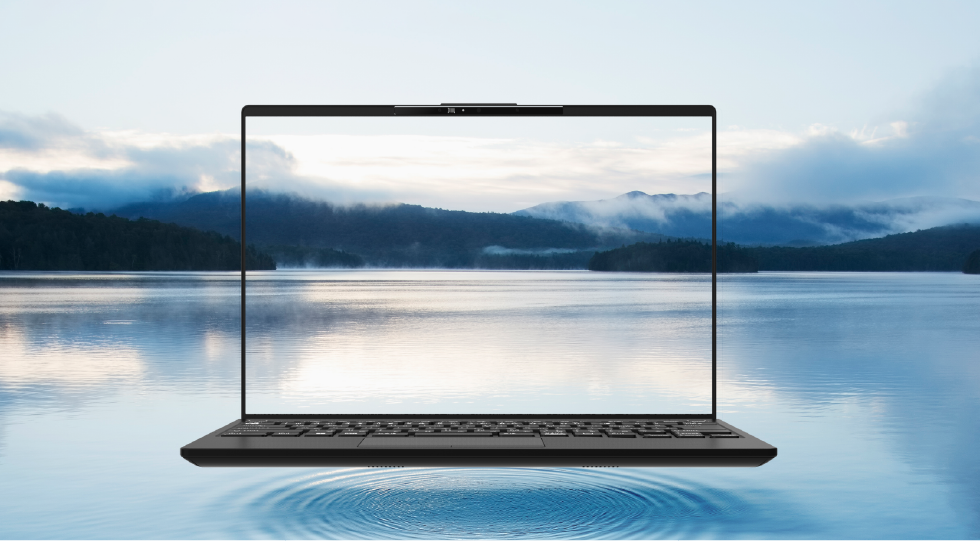
These are research notes, not a hands-on review. I have not used this laptop personally. Specs below are from Fujitsu’s Japanese consumer product page (fmworld.net), Japanese tech press (PC Watch, the-hikaku.net, Kakaku.com), and English coverage (TechRadar, Liliputing, NotebookCheck). The Fujitsu UH-X line has very sparse English-language sourcing — which is itself one of the relevant facts about owning one outside Japan.
A note on the model code and year
The slug for this product entry contains “2024,” which reflects when the entry was added to this site, not the launch year of the laptop. The UH-X/H1 was actually announced in January 2023 as Fujitsu’s first 14-inch ultralight at this weight class (the previous UH-X line was 13.3-inch). A successor, the UH-X/J3, launched in October 2024 with Intel Core Ultra (Meteor Lake). This article covers the H1 specifically.
Verified spec sheet
From Fujitsu’s fmworld.net/fmv/uh/2301/ consumer page:
- Weight: 689 g for the lightest configuration (2-cell battery
variant)
- 4-cell battery configurations weigh approximately 820 g
- Display: 14-inch IPS, 1920 × 1200 (WUXGA), 16:10
- Anti-glare matte
- 4-side ultra-narrow bezels
- Brightness: not stated as a discrete spec; reviews cite ~300 nits
- CPU: Intel 13th-gen U-series — i5-1335U / i7-1355U (Raptor Lake)
- GPU: Intel Iris Xe (integrated)
- RAM: 16 GB or 32 GB LPDDR5, soldered (no upgrade path)
- SSD: 256 GB / 512 GB / 1 TB / 2 TB PCIe Gen4 NVMe
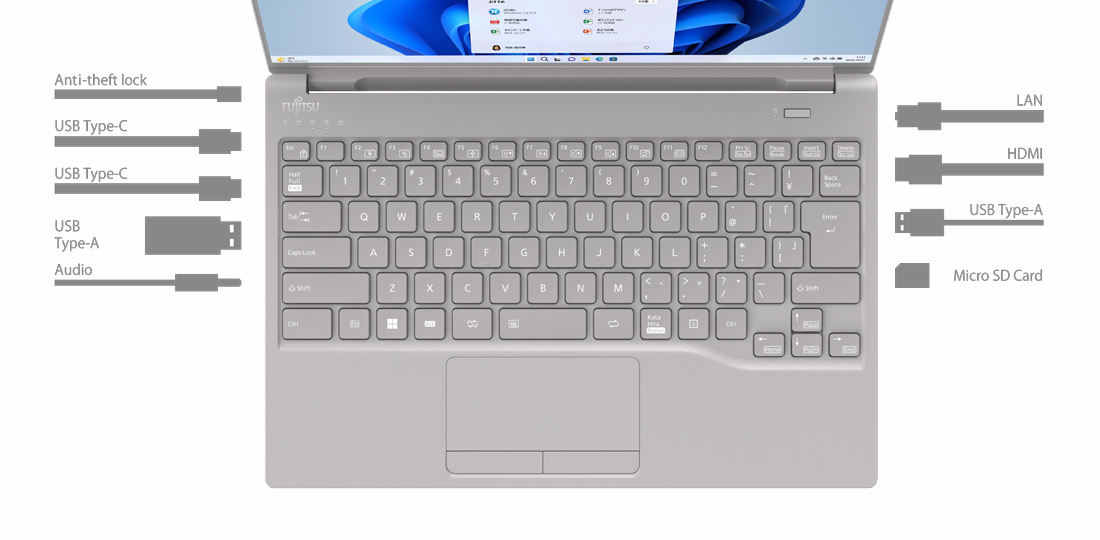
- Ports: 2× USB-C 3.2 Gen 2 (with PD + DisplayPort), 2× USB-A 3.2 Gen 1, HDMI, RJ-45 Gigabit Ethernet, microSD card slot, 3.5 mm combo, anti-theft lock slot
- Wireless: Wi-Fi 6E, Bluetooth 5.3
- Battery: 2-cell (lighter, lower capacity) or 4-cell (heavier, longer runtime). Stated runtime around 11 hr (2-cell) / 22 hr (4-cell) under JEITA 2.0 testing — a notably optimistic benchmark vs. real-world use.
- Webcam: 1080p with privacy shutter, IR for Windows Hello
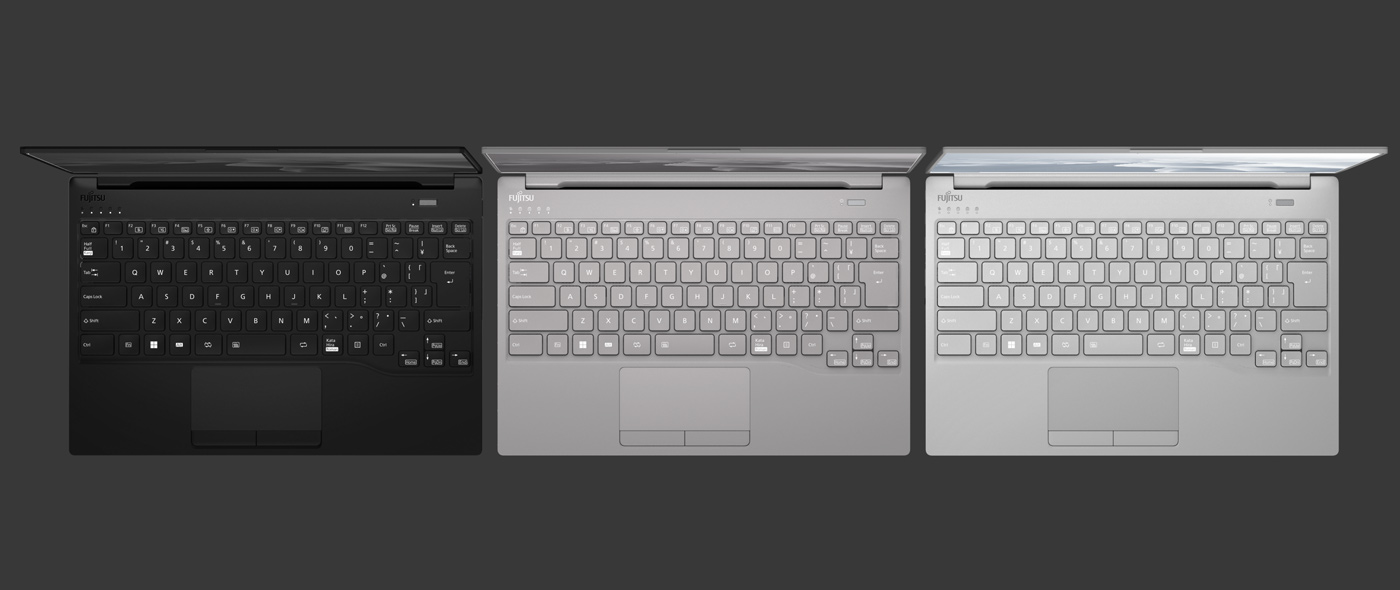
- Keyboard: Backlit (configurable), JP or US layout depending on SKU
- OS: Windows 11 Home or Pro
- Color: Pict Black, Light Silver, Brilliant Silver
- Build: Magnesium-lithium alloy chassis; “Made in Japan”
- Standards: MIL-STD-810H tested per Fujitsu
What stands out
689 grams in a 14-inch chassis is the headline. That’s around 1.51 lb — lighter than most 12-inch tablets with keyboards, and significantly lighter than every other laptop this site covers. For comparison:
- Fujitsu UH-X/H1: 689 g
- VAIO SX12: 899 g
- Lenovo X1 Carbon Gen 13 Aura: 980 g (lightest config)
- HP OmniBook 7 Aero (2025): 1,000 g
- Asus Zenbook S 13 OLED: 1,000 g
You give up a few specific things to get there (small battery in the lightest config, modest brightness, JP-market support footprint), but the weight itself is exceptional and isn’t matched by any mainstream Western-market laptop at any price.
Real ports, kept. Despite the weight, Fujitsu kept full-size HDMI, Gigabit Ethernet (RJ-45), two USB-A, microSD, and the Kensington-style anti-theft slot. This is unusual for an ultralight — most have stripped down to USB-C plus one USB-A.
Magnesium-lithium chassis, made in Japan. The build approach is deliberately low-density material rather than carbon fiber. Older generations of the UH-X line have generally held up well in long-term reviews, with the typical caveat that magnesium alloys can dent rather than flex.
The display is 1920×1200. Below this site’s preferred 2K threshold. The matte anti-glare coating is well-tuned per Japanese reviews, and 16:10 is the right aspect for documents and code, but the pixel density (~163 PPI) is unremarkable next to the X1 Carbon OLED’s 244 PPI or the OmniBook 7 Aero’s 227 PPI. If display sharpness is your top priority, this isn’t the laptop.
Trade-offs worth knowing
- Battery is the obvious tradeoff for the weight. The 2-cell battery in the lightest config has lower real-world runtime than the 4-cell. Fujitsu sells both options; choosing the heavier 4-cell pushes the weight to ~820 g — still lighter than every other laptop this site covers but no longer the headline 689 g number.
- JP-market focus. Primary sales channel is fmworld.net and Japanese retail. International buyers typically use a forwarder (Tenso, ZenMarket, Japan-bicross) which adds shipping cost and removes US warranty. Fujitsu has limited consumer presence outside Japan.
- No Thunderbolt. USB-C ports are 3.2 Gen 2 (10 Gbps with DisplayPort/PD), not USB4 or TB4. Adequate for most workloads; rules out Thunderbolt eGPU or top-tier docking.
- No touchscreen. All UH-X/H1 configurations are non-touch. Fujitsu has separate convertible models (LIFEBOOK UH90 and WU2/H1 with convertible options) for touch use.
- Silicon is a generation behind. 13th-gen Raptor Lake is fine — efficient, well-supported — but Meteor Lake (Core Ultra Series 1) and Lunar Lake (Series 2) are now standard at this price point. The newer UH-X/J3 addresses this with Core Ultra 7 155U.
- No Copilot+ NPU. Raptor Lake U doesn’t have a discrete NPU; if on-device AI features matter, look at the J3 successor or other laptops.
How it fits the site
The UH-X/H1 is here as a reference point for what’s possible at the extreme of this weight class, not as a top recommendation for most US/EU buyers. It belongs in a buying decision if:
- You travel internationally and would actively prefer a 689 g laptop over an 980 g one for daily carry.
- You’re comfortable with importing from Japan (forwarder cost, no US warranty, JP-language support documentation).
- You don’t need a high-DPI display.
- You don’t need Thunderbolt or a discrete NPU.
For most readers, the X1 Carbon Gen 13 Aura, the Asus Zenbook S 13 OLED, and the HP OmniBook 7 Aero are easier-to-buy alternatives in the same weight zone with better display options and standard US warranty.
What I still don’t know
- Real-world battery life under typical office workloads. JEITA 2.0’s 11-hour figure is optimistic; independent testing in Japanese reviews puts mixed-use closer to 6–8 hours on the 2-cell.
- Sustained performance and fan noise in the lightest 2-cell config — minimal cooling volume in a 689 g chassis is a real question.
- Keyboard feel — Japanese reviews praise it; I haven’t typed on one personally.
- How the magnesium-lithium chassis ages over 3+ years of daily carry — older UH-X reviews suggest “well, but with visible dents in slot pickup if dropped from height.”
- Whether buying via forwarder is genuinely worth the friction for an English-speaking user vs. just buying an X1 Carbon at similar weight class with full US support.
- Whether the J3 successor is meaningfully better in daily use to justify chasing the newer model. The J3 is on this site’s list to research separately.
Caveats
- Desk research only. I have not handled the UH-X/H1 in person.
- Specs above are from Fujitsu’s Japanese consumer product page at the time of writing. Configurations and pricing change regularly, and JP-market SKUs may differ from international forwarder inventory.
- The “2024” in the slug reflects when this entry was added to the site, not the laptop’s launch year (January 2023).
- Image-use posture: Fujitsu product images used in editorial context with attribution. No commercial relationship with Fujitsu.
- No affiliate links anywhere in this article.
If I get hands-on with the UH-X — most likely via an importer event, or a trip to Japan — there will be a separate dated article rather than edits to this one.