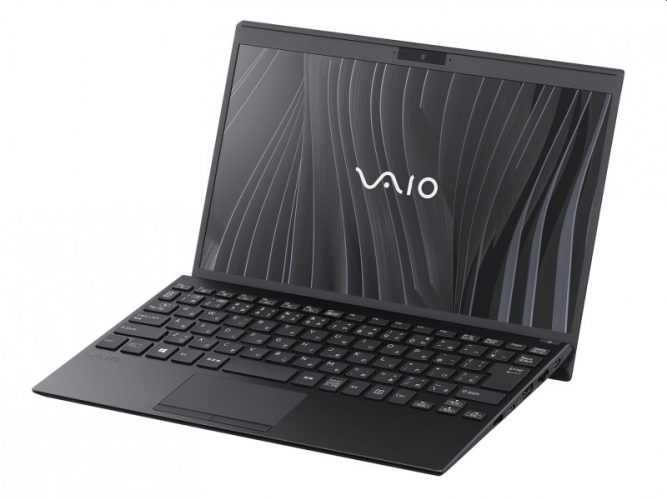
These are research notes, not a hands-on review. I have not used the SX12 personally. Specs below are from VAIO’s official Japanese product page, US distributor listings, the regional Hong Kong site, and tech press coverage (Liliputing, AnandTech, TechRadar, Engadget). The chassis design has been continuous through several CPU generations, so older photos still represent the current product visually.
What this is
The VAIO SX12 is a 12.5-inch ultraportable made in Nagano, Japan, that VAIO has refreshed annually with the latest Intel U/P-series chips. The current generation runs Intel 13th-gen Core (Raptor Lake) U and P series, from i3-1315U up to i7-1360P. Starting weight has held at 899 grams through the 13th-gen refresh.
The 2024 model is sold in:
- Japan (vaio.com — primary market)
- Hong Kong (hk.vaio.com — English)
- US (us.vaio.com via Trans Cosmos / Premium PC; sometimes Amazon US under specific SKUs)
The SX12 is unusual in two specific ways that bear directly on this site’s editorial frame: it’s a 12.5-inch laptop in a market that moved almost entirely to 13.3”+ years ago, and it carries Thunderbolt 4 plus a real built-in cellular option (nanoSIM + eSIM combo on top configurations) at sub-1-kg weight.
Verified spec sheet
From VAIO’s product material and tech press coverage:
- Weight: 899 g / 1.98 lb starting (varies by config; the built-in WWAN module and larger battery options can push higher)
- Chassis: Carbon-fiber composite top and bottom; “Made in Nagano, Japan”
- Display: 12.5-inch IPS, anti-glare
- 1920 × 1080 (FHD) standard option
- 4K (3840 × 2160) optional in some configurations
- Brightness: not stated as a discrete spec
- CPU: Intel 13th-gen, i3-1315U / i5-1335U / i5-1340P / i7-1355U / i7-1360P — both U and P series available
- GPU: Intel Iris Xe (integrated)
- RAM: 8 / 16 / 32 GB LPDDR5
- SSD: Up to 2 TB PCIe Gen4 NVMe (M.2 2280)
- Ports: 2× Thunderbolt 4 (USB-C), 1× USB-A 3.2 Gen 1, HDMI, RJ-45 Gigabit Ethernet, 3.5 mm combo, microSD, VGA (yes, still)
- WWAN: nanoSIM + eSIM combo on top SKUs — both physical and embedded SIM, simultaneously. Dual-SIM support is rare in this weight class.
- Wireless: Wi-Fi 6E, Bluetooth 5.3
- Battery: 53 Wh, 10.5 hr video / 29.5 hr idle stated
- Webcam: 2 MP IR for Windows Hello
- Keyboard: Backlit, full-pitch, with fingerprint reader on the power button
- OS: Windows 11 Home or Windows 11 Pro
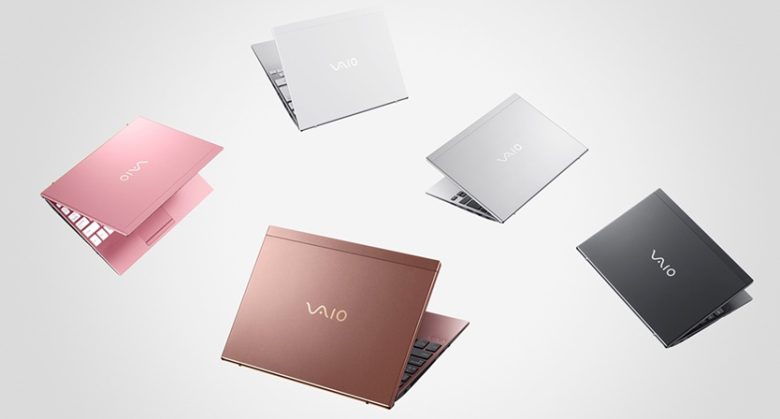
- Color options: Fine Black, Silver, Brown, White, Rose Gold — five finishes are unusual at this price tier
What stands out
Real ports, in a sub-1-kg laptop. Most ultraportables this light have stripped down to USB-C plus maybe one USB-A. The SX12 keeps HDMI, full Gigabit Ethernet (RJ-45), and even VGA in the same chassis, and adds two Thunderbolt 4 for modern docks. The trade is chassis volume — at 12.5 inches the device has space for a port shelf that wouldn’t fit on, say, the Asus Zenbook S 13 OLED.
nanoSIM + eSIM combined. This is not “WWAN optional” — it’s a genuine dual-SIM device with both physical and embedded slots usable simultaneously. If you travel internationally with a separate work SIM, this is rare. Most ultraportables that offer cellular have single-eSIM at best.
Made in Japan. The Nagano assembly is something VAIO leans into publicly and is part of why the SX12 commands a premium. It’s a genuine differentiator from mass-market ultraportables, but not one that affects daily use directly.
The display is FHD, not 2K. 1920×1080 at 12.5 inches is ~176 PPI — usable but not crisp by 2024 standards. Site editorial preference is OLED, or IPS at 2K+. The SX12 doesn’t meet either bar in the standard configuration. A 4K option exists in some regional SKUs but isn’t widely available in the US.
Keyboard is JP layout in domestic Japanese SKUs. US configurations ship with English layout; if you import from Japan directly, you’ll get the JP layout (which has different Enter, narrower keys around Backspace, and Japanese kana sub-legends). Easy to live with for many users; a non-starter for others.
Trade-offs worth knowing
- FHD display. Below this site’s editorial preference. If you spend the day looking at fine text or want a high-PPI experience, the SX12 is not the strongest pick at this weight class.
- Battery is modest. 53 Wh is smaller than the X1 Carbon’s 57 Wh, the OmniBook 7 Aero’s 3-cell, or the Asus Zenbook S 13’s 63 Wh. Stated 10.5-hour video figure suggests real-world office work closer to 7–8 hours, not the 29.5-hour idle spec.
- Premium pricing. SX12 configurations run $1,800–$2,800+ USD depending on CPU, RAM, SSD, and WWAN module. The 4K + i7-1360P + WWAN + 32 GB top SKU prices well above the OLED X1 Carbon.
- Limited US support footprint. VAIO US support is run by a separate distributor; warranty service is more constrained than with Lenovo or HP. International travelers may find it easier to service in Japan.
- No touchscreen option. The SX12 is keyboard-only across all current configurations.
How it fits the site
The SX12 is here for context, not as a top recommendation. It’s the laptop you reach for if:
- You specifically need a 12.5-inch chassis for travel (smaller bag footprint than 13.3”/14” alternatives).
- You need real built-in cellular with both physical and embedded SIM slots.
- You actively want legacy ports (Ethernet, HDMI, VGA) in a modern ultraportable.
- “Made in Japan” matters to you for build provenance reasons.
If those don’t apply, the Asus Zenbook S 13 OLED or Lenovo X1 Carbon Gen 13 Aura offer better display and pricing in the same weight zone.
What I still don’t know
- Real-world battery under modern workloads. The 29.5-hour idle figure is achieved with brightness at ~150 nits per VAIO’s testing notes. Browser + IDE + video calls drains much faster.
- Display brightness under direct sunlight — VAIO doesn’t publish a peak nit number for the FHD panel.
- Sustained CPU performance and fan profile in the i7-1360P configuration. The 12.5-inch chassis is small for a P-series chip.
- Keyboard travel and feel in person — VAIO’s marketing emphasizes this but I haven’t typed on one.
- Whether the WWAN module reliably handles eSIM + nanoSIM simultaneously in carriers I’d actually use. Spec sheet says yes; practical experience may differ.
- Service and parts availability in the US for out-of-warranty repairs — VAIO support is much smaller than Lenovo or HP US service networks.
Caveats
- Desk research only. I have not handled the SX12 in person.
- Specs above are from VAIO’s official material and tech press at the time of writing. Pricing and configurations change regularly, especially with regional variants.
- The product photo shown is an earlier SX12 generation; the chassis design has been continuous, so the visual is representative even though the silicon inside the 2024 model differs.
- Image-use posture: VAIO press materials reposted in editorial context, attributed to source. No commercial relationship with VAIO.
- No affiliate links anywhere in this article.
If I get hands-on with the SX12 — most likely via a Premium PC pop-up or an importer event — there will be a separate dated article rather than edits to this one.